This article was released as Pharm Edaily Premium Content on August 27, 2026, at 8:03 AM.
[Kim Saemi, Edaily Reporter] On Aug. 26, SK Biopharmaceuticals jumped 8.53% after announcing a licensing deal worth up to $795 million for late-stage epilepsy candidate Opakalim, reclaiming the 90,000-won level after a recent pullback. Xcell Therapeutics Inc., meanwhile, briefly hit the daily upper limit on expectations that recombinant collagen could emerge as a new growth driver.
|

SK Biopharm Bets $795 Million on Opakalim
SK Biopharm closed at 91,600 won, up 8.53%, after rising as much as 12.32% intraday to 94,800 won, according to KG Zeroin’s MP DOCTOR.
The stock began climbing sharply around 11 a.m., shortly after the company disclosed a licensing deal for Biohaven’s late-stage epilepsy candidate Opakalim, or BHV-7000. Trading volume surged to 597,598 shares, about 4.4 times the average of the previous 19 sessions.
SK Biopharm secured worldwide exclusive rights to Opakalim, follow-on Kv7 activators and Biohaven’s Kv7 discovery platform for up to $795 million, or about 1.10 trillion won. The non-refundable upfront payment alone totals $400 million, or about 553.2 billion won, among the largest ever for a licensing-in deal by a Korean pharmaceutical or biotech company.
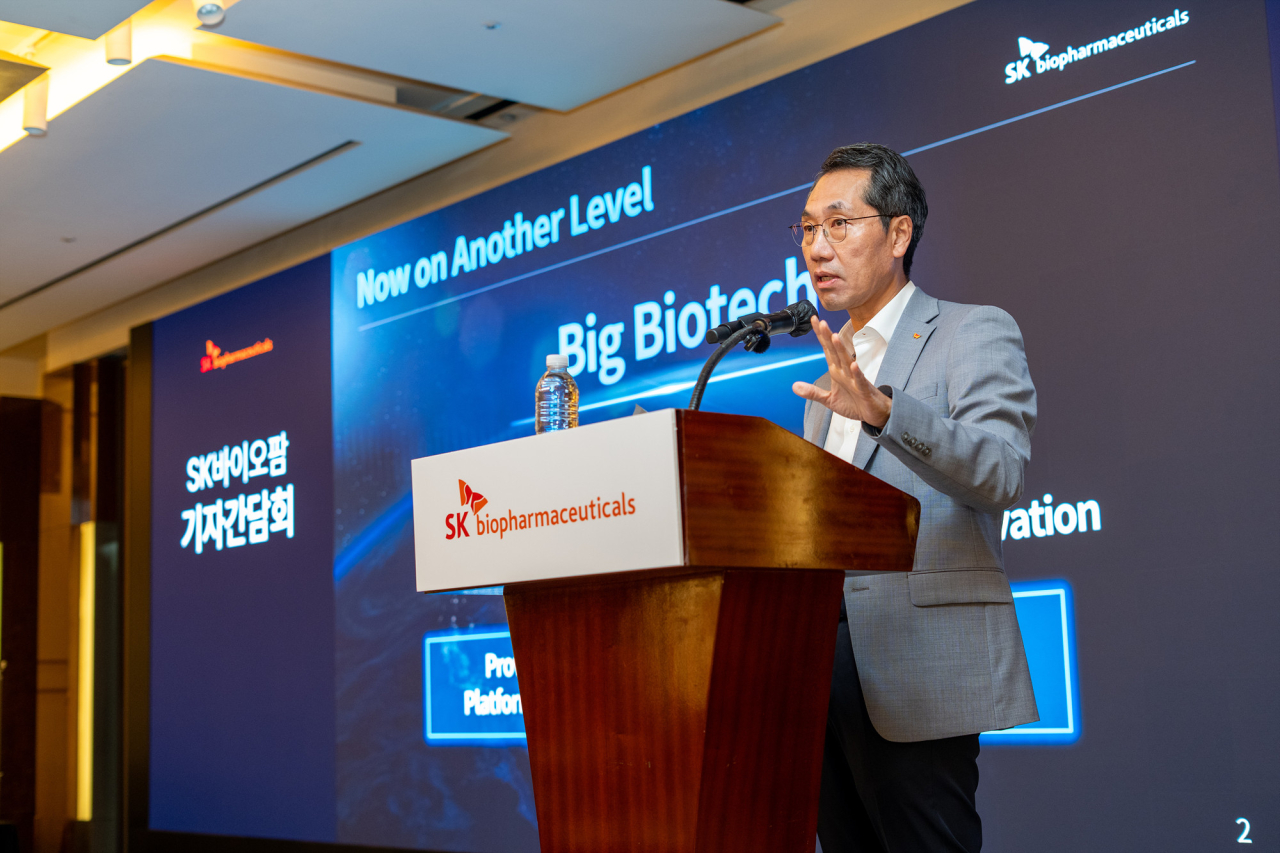
At a press conference later that day, the company said the deal would help establish a multi-product direct-sales model in the U.S. It plans to leverage the sales organization and network of epilepsy specialists built around Xcopri to commercialize Opakalim without creating a separate large-scale sales infrastructure.
|
Investors are also watching Opakalim as a potential rival to Xenon Pharmaceuticals’ azetukalner, or XEN1101. Xenon is ahead in development, with azetukalner having met the primary endpoint in a Phase 3 focal-onset seizure trial in March and an FDA filing planned for the third quarter.
Opakalim is in the Phase 2/3 RISE2 and RISE3 trials, with RISE3 topline data expected in the second half. SK Biopharm believes the candidate could compete despite reaching the market one to two years later, citing its potential tolerability advantage, including fewer central nervous system adverse events such as somnolence and dizziness.
The company is targeting a U.S. launch as early as 2029. The RISE3 readout will be the first major test of whether its 553.2 billion won upfront bet can translate into a second U.S. direct-sales product after Xcopri and a credible challenge to Xenon.
|
Xcell Jumps 15% on Recombinant Collagen Push
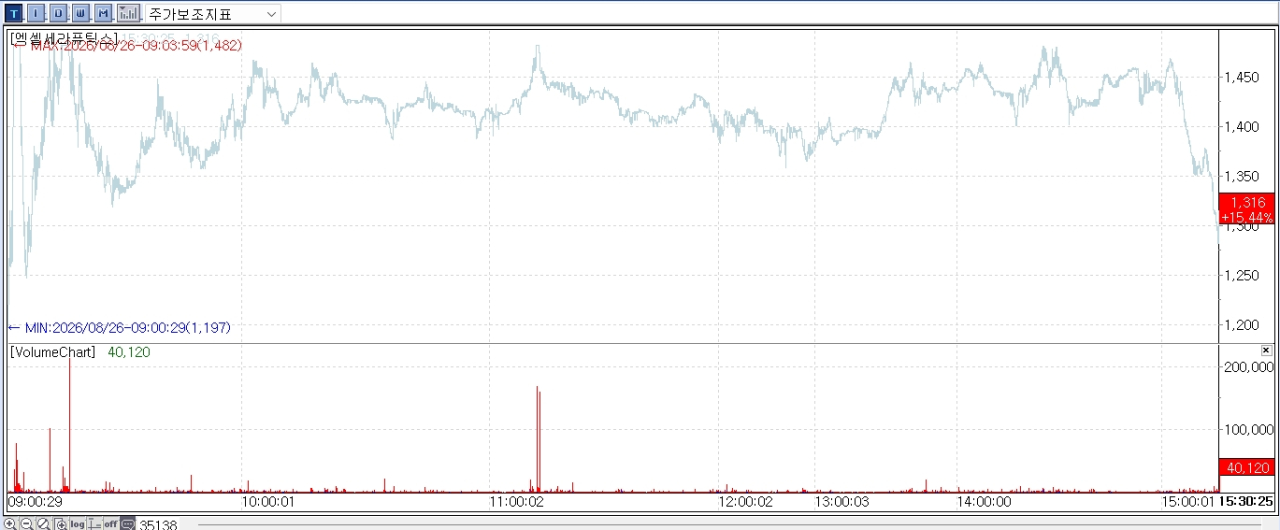
Xcell closed at 1,316 won, up 15.44%. The stock briefly hit the daily upper limit at 1,482 won in early trading before paring gains.
The rally came as recombinant collagen emerged as a potential new revenue source. On Aug. 25, the company announced an exclusive Korean distribution agreement with China’s SHINYA BIO for Triple-Helix Structured Recombinant Human Collagen Type III.
The product uses Chinese hamster ovary, or CHO, cells as an expression host to reproduce the triple-helix structure of human collagen. The company said no animal- or human-derived ingredients are used as raw materials in the cultivation and production process, helping improve supply stability and product consistency compared with conventional collagen extracted directly from animal tissues.
Xcell plans to initially target cosmetics and aesthetic applications before expanding into other areas. CEO Lee Eui-il has set a target of more than 10 billion won in annual collagen-related sales by 2030.
The company expects higher margins than conventional distribution because the product is a high-value-added biomaterial. It also sees near-term revenue potential as market demand is already established and expected to grow.
The deal further expands Xcell’s relationship with SHINYA BIO. Xcell signed a $350,000 exosome culture-media supply agreement with the Chinese company in March. Under the expanded partnership, Xcell’s media will be supplied to China while SHINYA BIO’s recombinant collagen will be distributed in Korea, creating a cross-selling framework between the two companies.